


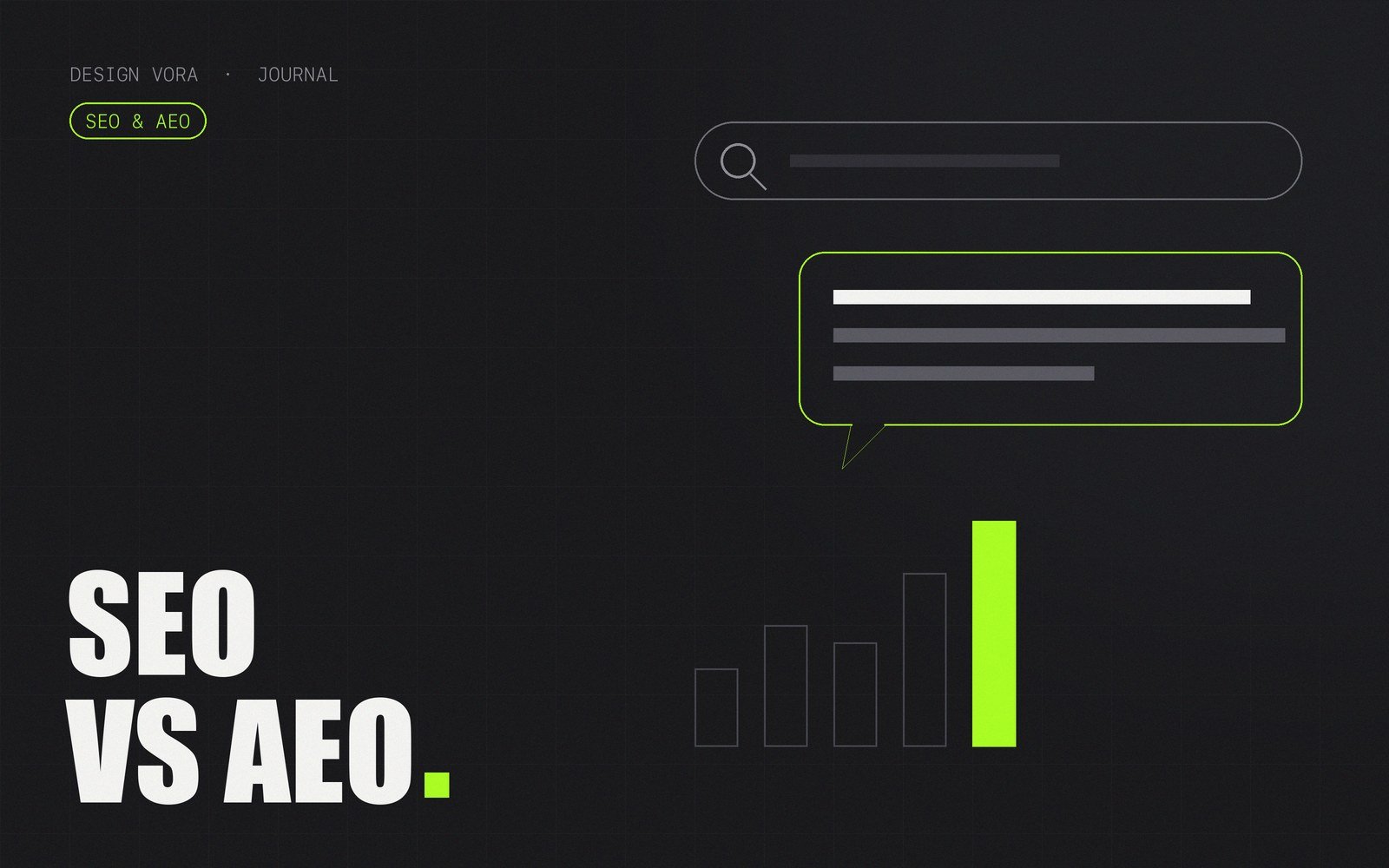
SEO (search engine optimization) helps your pages rank in search results. AEO (answer engine optimization) helps AI tools like ChatGPT, Gemini, Perplexity and Google's AI answers understand, trust and quote your content. They work best together: SEO earns visibility, AEO turns your content into the direct answer.
What is SEO?
SEO is the practice of improving your website so it appears higher in search results for the terms your customers use. It covers three areas: technical SEO (speed, crawlability, mobile friendliness), on-page SEO (helpful content, titles, headings, internal links) and off-page SEO (reputation and links from other sites).
What is AEO?
AEO is the practice of shaping your content so answer engines can extract a clear, accurate answer from it and cite you as the source. Answer engines include AI assistants and the AI summaries that now appear at the top of many search results.
Instead of competing for a click, you are competing to be the answer. When an AI quotes your business, you gain trust before the visitor even reaches your site.
How are SEO and AEO different?
| SEO | AEO | |
|---|---|---|
| Goal | Rank pages in search results | Be quoted as the answer |
| Where it shows | Search result listings | AI assistants and AI summaries |
| Content style | Comprehensive pages on a topic | Direct answers to specific questions |
| Key signals | Relevance, links, page experience | Clarity, structure, credibility, consistency |
| Success measure | Rankings, clicks, traffic | Mentions, citations, branded searches |
How to optimize your website for AEO
- Answer first. Put a clear, two or three sentence answer at the top of each page or section, then expand.
- Use question headings. Phrase H2s the way people actually ask, such as "How long does a website redesign take?"
- Add structured data. Schema markup for your organization, services, articles and FAQs helps machines understand your content.
- Create FAQ sections on service pages with honest, specific answers.
- Be consistent everywhere. Your name, services and location should match across your website, Google Business Profile, directories and social profiles.
- Show expertise. Real examples, clear authorship and up-to-date information make your content more trustworthy to people and to AI.
Do you still need SEO if you do AEO?
Yes. AI tools often rely on content that search engines have already found and trusted. A fast, well-structured site with strong SEO foundations is far more likely to be used as a source. Think of SEO as the foundation and AEO as the layer that makes your expertise easy to quote.
How do you measure AEO?
AEO is newer and harder to track than traditional rankings. Useful signals include growth in branded searches, referral traffic from AI tools in your analytics, and regularly asking the main AI assistants the questions your customers ask to see whether your business appears in the answers.
Key takeaways
- SEO earns rankings and clicks. AEO earns citations in AI answers.
- Lead every page with a direct, plain answer, then add detail.
- Use question-style headings, FAQs and structured data.
- Keep your business information consistent across the web.
- Strong SEO foundations make AEO far more effective.
Frequently asked questions
Is AEO replacing SEO?
No. AEO builds on SEO. Answer engines still depend on websites that are fast, crawlable and trusted, so both work best together.
What is structured data?
Structured data, or schema markup, is code added to a page that describes its content in a standard format, such as an organization, a service, an article or a list of FAQs. It helps search engines and AI tools understand your content accurately.
How long does it take to see results from SEO and AEO?
Technical fixes can help within weeks, while content and authority usually build over several months. Consistent, helpful publishing is what compounds over time.